Science, data, and ideas — I work wherever the problems are interesting & status quo is the bottleneck. Chemical Engineering, Machine Learning, Electric Mobility and now LLMs (for good).
About
Chemical engineer by education, builder by inclination. I've worked across different domains — not because I couldn't pick a lane, but because the interesting problems rarely stay in one.
Currently exploring what happens when you apply rigorous thinking to machine learning and large language models.
EducationB.Tech. Chemical Engineering, IIT Kanpur (2026) B.F.A. Visual Arts, Prachin Kala Kendra Chandigarh (2019)
The PhysicalPowerlifting, Biomechanics, Bodybuilding, Cycling
The SensesPerfumery, Web & Graphic Design, Mixology Co-founder, Meraki (Culinary Arts Society, IITK)
The MindNeuroscience, Evolutionary Psych, Eastern Philosophy & Consciousness
When a gas bubble in a liquid is disturbed — by a pressure wave, a vibration, or simply being formed — it doesn't just sit there. It oscillates, expanding and contracting at a characteristic frequency. This is the Minnaert frequency, named after the Dutch physicist Marcel Minnaert who first described it in 1933.
Understanding this frequency matters across a surprising range of applications: acoustic cavitation in medical ultrasound, the distinct sound signature of carbonated beverages, underwater acoustics, and even industrial mixing processes. The sound of a stream, it turns out, is almost entirely the sound of bubbles.
Approach
The Minnaert frequency is derived from the equation of motion of a bubble modeled as a damped harmonic oscillator. For a spherical bubble of radius R in a liquid of density ρ at ambient pressure P₀, the resonant frequency is:
f = (1/2πR) × √(3γP₀/ρ)
I implemented this model computationally and extended it to account for different fluid media — varying surface tension, dissolved gas concentration, and viscosity. The simulator uses presets for water, carbonated water, beer (CO₂ in solution), and nitrogenated stout (a CO₂/N₂ mix), which explains the dramatically different bubble behaviour and sound between, say, a Guinness and a lager.
Outcomes
The finished tool lets users set bubble radius and fluid properties (via presets or custom sliders), visualise the oscillation waveform in real time, and hear the computed resonant frequency as an audio tone. The difference between CO₂ bubbles in lager (~2mm radius, ~1.6 kHz) and nitrogen bubbles in stout (~0.05mm radius, ~65 kHz) is immediately audible.
Using competitive powerlifting data to answer a deceptively simple question: how strong is strong?
Strength Percentile Calculator
How strong are you?
Enter your squat / bench / deadlift → get your percentile against competitive lifters
The Problem
Strength has no obvious benchmark. A 140kg deadlift feels impressive until you're in a gym full of serious lifters. A 200kg squat sounds elite until you see what competitive powerlifters do. There's no intuitive way for most people — even dedicated gym-goers — to contextualise their numbers.
The goal was to build a model that could map raw lift numbers to meaningful percentiles within a large, real-world population of strength athletes.
Approach
The OpenPowerlifting dataset is one of the largest open databases of powerlifting competition records — millions of individual meet results spanning dozens of federations, weight classes, age groups, and equipment categories. After cleaning and filtering for raw (unequipped) lifters, the usable dataset contained several hundred thousand entries.
The analysis explored the distribution of squat, bench press, and deadlift performance by bodyweight bracket. A percentile model was built that accounts for bodyweight scaling, allowing fair comparison across different body sizes. The tool also surfaces the Wilks and DOTS coefficients as secondary metrics for those familiar with them.
Outcomes & Findings
The strength distribution is dramatically non-linear. The gap between the 50th and 90th percentile is large but achievable with serious training. The gap between the 90th and 99th percentile is enormous — reflecting years of dedicated competition-level preparation. Getting to "pretty strong" is accessible. Getting to "elite" is a different conversation.
The calculator lets anyone enter their three competition lifts and bodyweight, and returns their percentile ranking against the dataset — broken down by lift and combined total. A simple, honest benchmark.
Some ideas are right but the timing is wrong. Some teams are good but the alignment is off. Ours was probably both. This is the honest version of what happened.
The Idea
[Describe your startup idea here — what problem were you trying to solve, who was the customer, what was the core hypothesis you were betting on.]
We were convinced the problem was real. We'd seen it ourselves. We knew people who had it. That felt like enough to start.
What We Built
[Describe the MVP — what you shipped, what tools/stack you used, what stage you got to before calling it. A rough product description, how many users you reached if any, what the feedback was.]
We moved fast. Maybe faster than we should have. The product worked, technically. What it didn't do was solve a problem people would pay to have solved.
What Went Wrong
The honest answer is that we built before we validated. We assumed that people acknowledging a problem meant they wanted a solution — and specifically, wanted to pay for ours. That assumption turned out to be wrong.
Co-founder dynamics added to it. Two people with different risk tolerances and different timelines for "this isn't working" will eventually diverge. We diverged. The company didn't survive it.
What I Took From It
Talk to customers before you build, not while you build. "I would use that" is not the same as "I will pay for that." The gap between the two is where most startups die.
Choose co-founders not just for their skills but for their values around time, sacrifice, and what failure looks like. And be honest, early, when things aren't working — with your co-founder and with yourself.
I'd do it again. Different idea, different approach — but yes, again. The experience of building something from nothing, even if it doesn't make it, is genuinely irreplaceable.
Chemical EngineeringSustainable Manufacturing ProcessesEngineering DesignASPEN Plus V15
Chemical Engineering Project #2
[Your one-line description of what this project is about and why it matters.]
The Problem
[Describe the engineering problem or research question this project addressed. What was the context — coursework, independent research, industrial application? What made it interesting or challenging?]
Approach
[Describe your methodology — models used, experiments run, tools and software, any novel approaches or adaptations. Keep it accessible but don't dumb it down.]
[Second paragraph if needed — specific results, data, any interesting intermediate findings.]
Outcomes
[What were the results? Quantify where possible. What would you do differently? What did this project lead to — further work, insights, publications, tools?]
Currently working on a project in the AI and LLM space. Write-up and interactive demo to follow on completion.
~30% complete
What it's about
[Tease what you're building here — enough to be interesting, without giving it all away. What problem is it trying to solve? What makes it different from just using an existing LLM tool?]
Check back in a few weeks — or reach out if you want to hear about it directly.
Essays & Musings
Thoughts on evolutionary psychology, modern consumerism, consciousness, and the mechanics of the human mind.
Read Essay
May 2026 • 5 min read
Essay Title Sample
Philosophy
Read Essay
June 2026 • 10 min read
Why you should quit watching pornography
Attention & Society
Read Essay
July 2026 • 15 min read
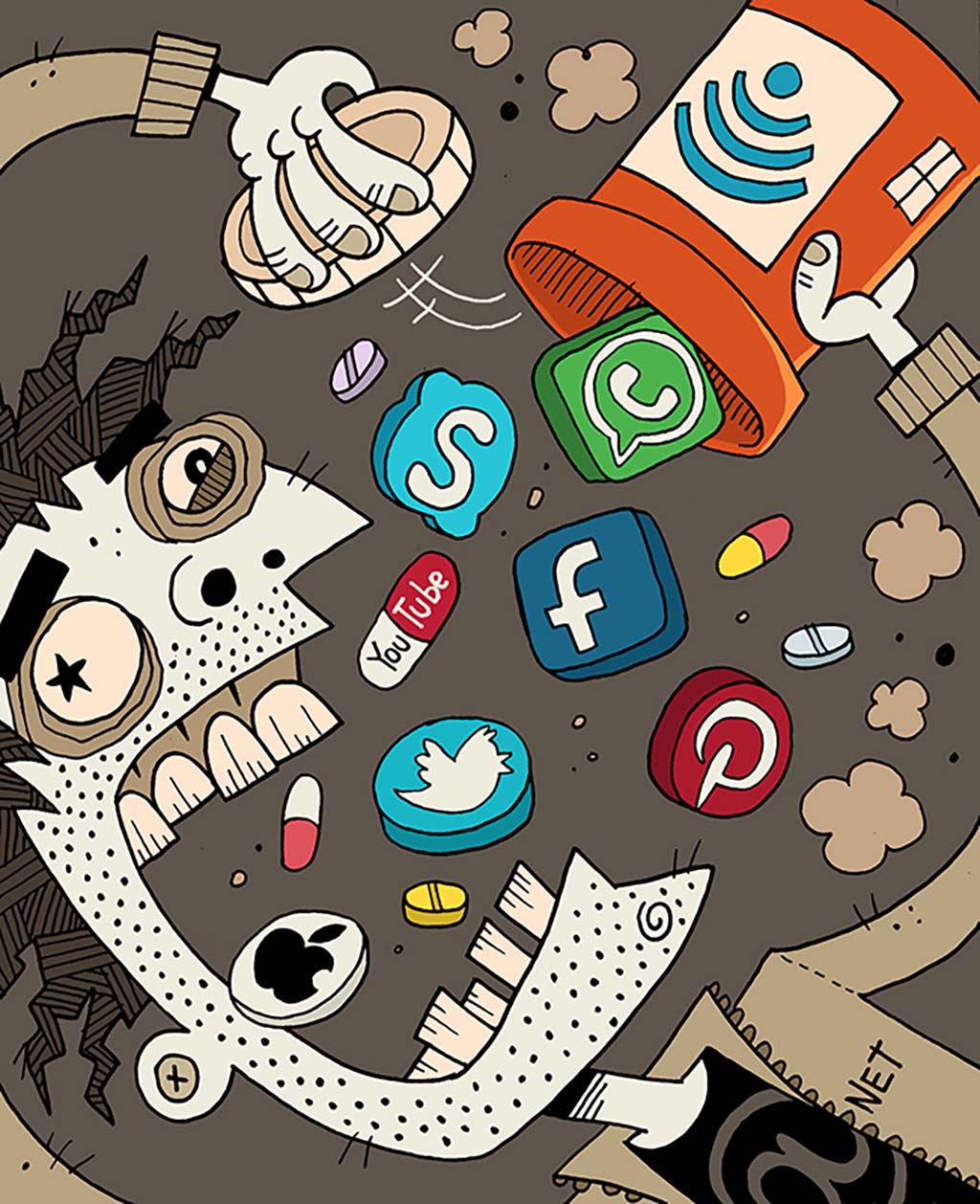
Why you should quit social media
Dopamine Detox
Essay Title Sample
Your actual essay text starts here in Markdown.
Subheadings work too
You can just write naturally.
Why you should quit watching pornography
Your essay text goes here…
This is where you will write your actual essay.
Because we are using Markdown, you can easily use bold text, create lists, and even drop in code blocks without ever touching an HTML tag.
Why you should quit social media
Your essay text goes here…
This is where you will write your actual essay.
Because we are using Markdown, you can easily use bold text, create lists, and even drop in code blocks without ever touching an HTML tag.
Why you should quit social media
Your essay text goes here… This is where you will write your actual essay.
Because we are using Markdown, you can easily use bold text, create lists, and even drop in code blocks without ever touching an HTML tag.